Storage ottoman vs storage bench: what earns its floor space?
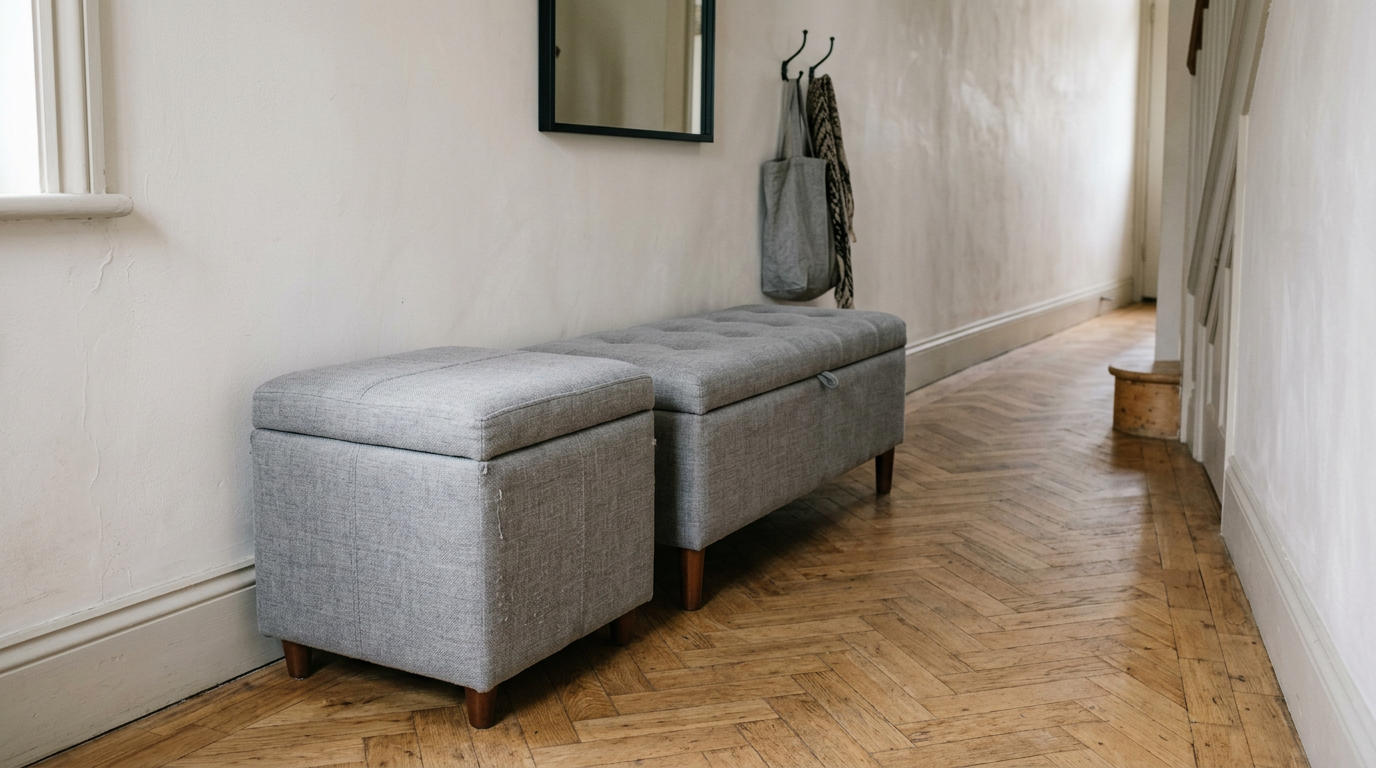
Both pieces promise “extra storage” in a small footprint, but they solve different traffic problems. Choose the ottoman if you need flexible seating; choose the bench if you need a daily drop zone.
Quick verdict
Easier to reposition for guests, softer top for occasional seating, usually lower visual mass.
Rigid frame holds bags and shoes predictably; easier to style with hooks and a mirror above.
Round-edge ottoman (medium footprint)
Best for: Living rooms that sometimes host game night
Look for a hinged lid with soft close and interior dividers so blankets don’t swallow smaller items.
Narrow slat bench (45–55 cm deep)
Best for: Narrow halls and the foot of a double bed
Prefer a ventilated interior if shoes live inside—liners beat musty surprises.
Lift-top bench with back
Best for: Kids’ spaces
Backrests signal “sit here” in shared rooms and keep cushions from sliding.
| Feature | Leader | Notes |
|---|---|---|
| Daily ergonomics | Bench | Firmer top is kinder for pulling boots on; ottoman tops can feel mushy for repeated sitting. |
| Guest flexibility | Ottoman | Light enough to drag toward conversation; benches read as fixed architecture. |
| Visual calm | Tie | Upholstered ottomans simplify sight lines; a slim timber bench reads lighter in sunny rooms. |
| Kid safety | Bench | Fewer rolling hazards; many benches use slower hinges by default—still verify finger clearance. |
How to decide in ten minutes
Stand in the room and simulate two rush-hour moments: leaving for work and welcoming a guest. If you need a place to sit while lacing shoes, bench. If you need a perch that moves to wherever people gather, ottoman.
Affiliate note
When we link to retailers, we may earn a commission. That never changes our testing order or verdicts—you can read the full policy on our privacy page.